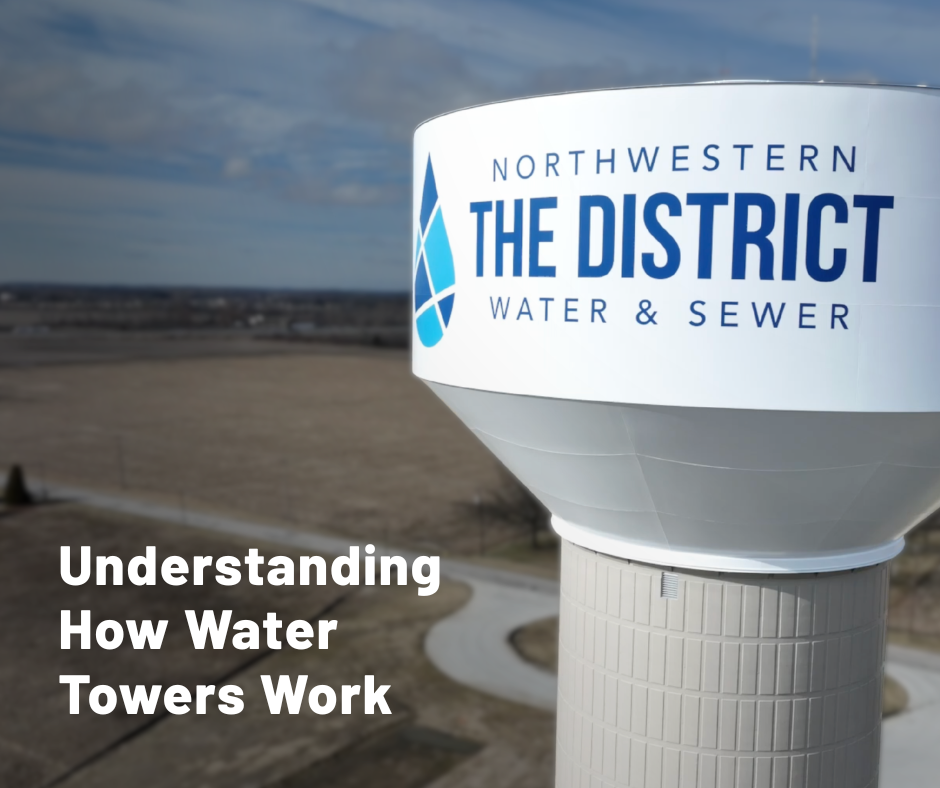
The marvel of hydrostatic pressure.
Most of us take water towers for granted, but these towering structures play a crucial role in delivering water to our homes and businesses. Understanding how they work can give you a newfound appreciation for this essential element of urban infrastructure.
The Science: Hydrostatic Pressure
At the heart of a water tower’s functionality lies a simple yet brilliant principle: hydrostatic pressure. With water pumped into an elevated tank, gravity does the rest. The downward force of gravity pushes the water through distribution pipes, creating consistent pressure throughout the system. That means that even during peak demand periods, the water supply remains reliable without the need for massive motors running continuously.
One fascinating aspect of water pressure is that it’s determined solely by the height of the water above the delivery point, not the volume in the tank. For every foot of elevation, there is approximately 0.43 psi (pounds per square inch) of water pressure generated. As long as the water level in the tower is high, you can count on a steady flow of water, regardless of how much remains in the tank.
Water usage can vary dramatically throughout the day. For instance, peak demand often occurs in the morning, when households wake up and start their day. In contrast, the demand drops significantly during the early hours of the morning. Water tower design effectively manages any fluctuations.
During times of high demand, such as the busy mornings, the water tower automatically kicks in to supply additional water to the distribution grid, ensuring that pressure doesn’t drop even when the local treatment plant is operating at full capacity. At night, when water usage declines, the treatment plant can run its pumps to refill the tower, getting it ready to handle the next day’s demands. This strategic timing keeps the system operating efficiently.
Cost-Effective Infrastructure
A key benefit of using water towers is the savings in infrastructure costs. Rather than investing in oversized pumps needed only during peak demand periods, municipalities can use smaller pumps sized for average demand. The water tower then handles spikes in usage, enabling significant cost savings.
In case of a power outage or a main pump failure, the water stored in the elevated tank serves as an emergency backup. Gravity ensures that the community continues to receive water even during unexpected events.
Water towers also offer energy savings. Water pumps can operate at night when electricity rates are lower, allowing municipalities to take advantage of cheaper energy costs. The water tower acts like a gravity battery, storing energy as pressurized water.
In summary, water towers are not just tall structures; they are integral components of our water supply systems, designed to optimize flow, manage demand, and provide a safety net during emergencies. The combination of hydrostatic pressure and strategic management enables these towers to deliver water efficiently and reliably. Next time you see a water tower, remember the intricate science and thoughtful planning that keep our taps flowing.