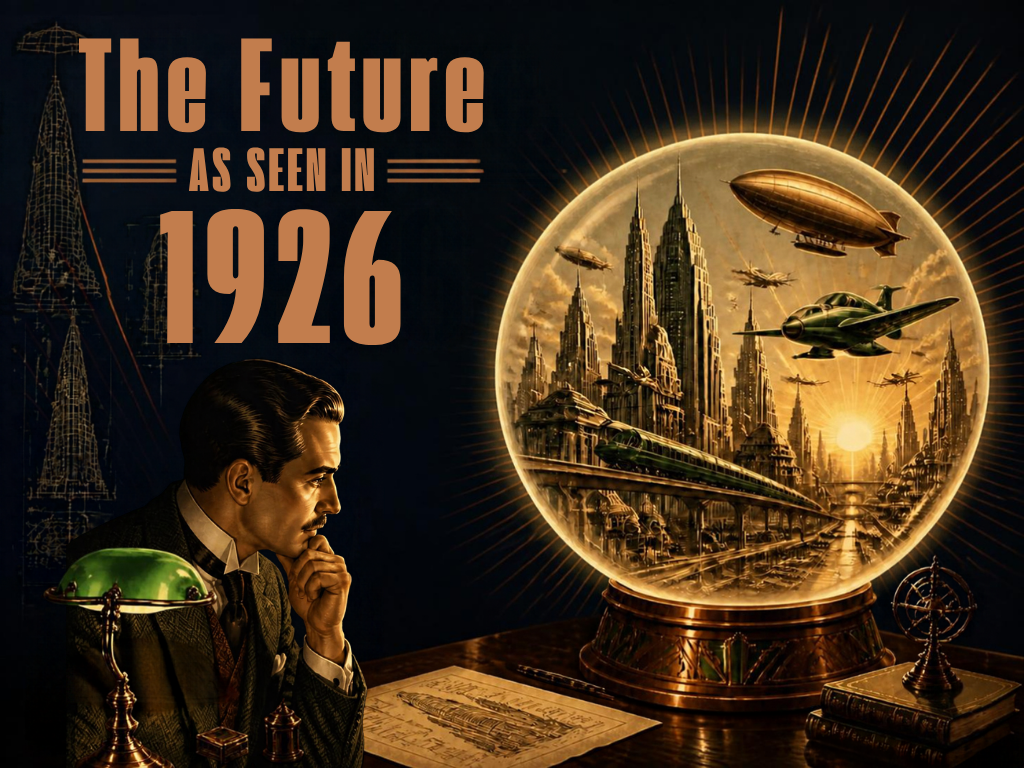
The future as seen in 1926.
In 1926, filmmaker Fritz Lang produced the iconic sci-fi masterpiece Metropolis, which depicted a tech-driven future set in 2026. The film introduced themes of automation, class struggle, and the consequences of technological advancement, reflecting the concerns of the era’s futurists. Its influence on science fiction and our modern perceptions of technology highlights the cultural significance of that year in shaping our understanding of the future.
As we celebrate Jones & Henry’s 100th anniversary in 2026, it’s fascinating to compare the audacious predictions made a century ago to today’s reality. Some forecasts were astonishingly accurate, while others missed the mark entirely. Here’s a closer look at the most intriguing predictions from 1926 and how they compare to our world today.
Accurate Predictions for 2026
A 1926 review in The Times of scientist A.M. Low’s book, The Future, envisioned a time filled with compact personal screens that would deliver news and enable visual communication. Today, it’s hard to imagine our lives without smartphones, which connect us through video-calling apps like FaceTime and Zoom. That remarkable foresight underscores the early 20th-century thinkers’ grasp of the connection between technology and human interaction.
The predictions didn’t stop there. Writers from yesteryear anticipated that phonographs would fade from popularity, paving the way for fully digitized music delivered effortlessly. Fast forward to the present, and platforms such as Spotify and Apple Music have transformed music consumption, providing users with instant access to vast libraries of music. That future has indeed come to pass.
Moreover, futurists envisioned a world in which household machinery would revolutionize our daily routines, predicting the rise of appliances similar to modern dishwashers and washing machines. The introduction of AI assistants like Alexa and Siri has profoundly changed how we handle everyday tasks, making life a little easier and allowing us to spend our time on what truly matters.
Additionally, the concept of a reduced workweek was proposed in 1926, anticipating that industrial automation would reshape work culture. Today, countless companies are exploring nontraditional workweeks to enhance the work-life balance and refine productivity. How fascinating that the seeds of such change were already being planted a century ago.
Wildly Inaccurate Predictions
However, not every prophecy hit the mark. For instance, some futurists believed global population growth would peak at around 5 to 5.2 billion, voicing concerns over overpopulation and resource scarcity. Today, we find ourselves with more than 8 billion people on the planet, underscoring how unpredictable demographic trends can be and showcasing our remarkable adaptability in addressing challenges ranging from food production to urbanization.
When it came to music, critics were confident that jazz would be extinct by 2026. Yet, not only has jazz survived, but it has thrived, evolving into various modern genres and maintaining a significant cultural influence across the globe. That evolution serves as a testament to the resilience of the arts, demonstrating their capacity to adapt and grow, even amid predictions of obsolescence.
In a bold vision for the future, some experts argued that the rise of personal airplanes would lead to a decline in cities and skyscrapers. Instead, urban areas have blossomed, with innovative architecture that meets contemporary needs. It’s remarkable to observe how human ingenuity continues to reimagine urban spaces.
Lastly, predictions once included the development of a synthetic drug designed to eliminate our need for sleep. Instead, sleep remains an essential part of human life, with science shedding light on its benefits. Our understanding of sleep’s importance in our overall health and wellness has only deepened.
Engineering Forecasts
When it comes to engineering and infrastructure, 1926 saw intriguing predictions about wireless energy and groundbreaking propulsion. Among the most remarkable and accurate visions were those of the brilliant inventor Nikola Tesla, who, in his famous 1926 interview with Collier’s Magazine, prophesied innovations akin to modern smartphones, the internet, and wireless global communications.
Tesla described the concept of a perfectly applied wireless system that would transform the Earth into a “huge brain,” connecting all things in real-time. He foresaw pocket-sized devices for instant communication and predicted that television and telephony would seamlessly blend, allowing people to see and hear each other from thousands of miles away.
Conclusion
As we look back at the predictions made in 1926, it’s clear that while some ideas were strikingly on point, others were far from reality. The balance between accurate foresight and miscalculations illustrates the complexities of predicting the future. However, these reflections serve as a reminder of our capacity for innovation and adaptation. As we approach the end of 2026, we can only wonder what new predictions will emerge and how our world will continue to evolve in ways that no one can fully anticipate.