
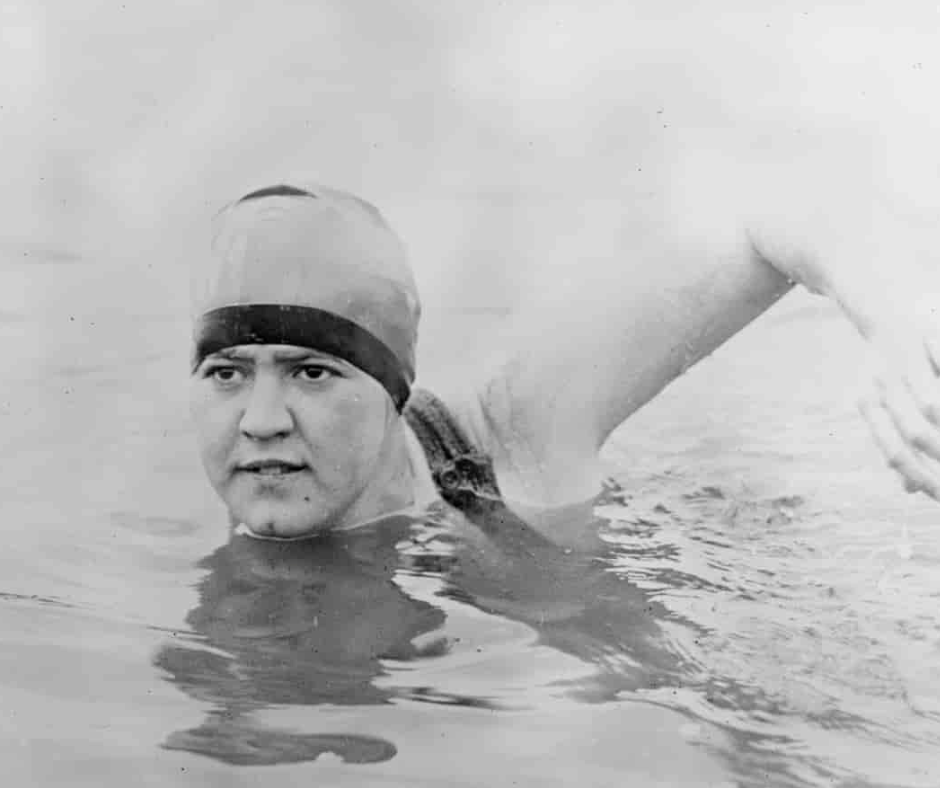
One hundred years ago, Gertrude Ederle became the first woman to swim across the English Channel and forever changed the landscape of women’s sports.
On August 6, 1926, a momentous milestone in sports history occurred as Gertrude Ederle, a 20-year-old American Olympic swimmer, became the first woman to swim across the English Channel. The breathtaking feat not only showcased her exceptional talent but also marked a significant moment in the fight for gender equality in athletics.
A Record-Breaking Achievement
Ederle began her grueling swim from Cap Gris-Nez, France, with the goal of reaching the shores of England. The swim was no ordinary task; Ederle faced daunting challenges, including treacherous tides and cold water, extending her distance to over 21 miles. Yet, armed with determination and a pioneering spirit, she plunged into the choppy waters wearing a two-piece swimsuit and goggles.
Taking an astonishing 14 hours and 31 minutes to complete her journey, Ederle shattered the existing men’s record by over two hours, set in 1923 at 16 hours and 33 minutes. Her resilience in the face of a “stiff gale” and frigid temperatures quickly turned her into a global sensation and redefined what was possible for female athletes.
Background of a Champion
Born to German immigrants on October 23, 1905, in New York City, Ederle did not learn to swim until the age of nine. By 15, she had mastered her swimming technique and competed in the 1924 Paris Olympics, where she earned a gold medal in the 4 x 100-meter relay and a bronze medal in both the 100- and 400-meter freestyle events. Ederle’s accomplishments in the Olympics had already established her as a celebrated athlete, but her Channel swim solidified her legacy.
Gertrude Ederle’s achievement was groundbreaking, pushing against the 1920s stereotype that portrayed women as the “weaker sex.” Her incredible journey across the Channel not only elevated her status to that of the “Queen of the Waves” but also demonstrated that women could endure and excel in the most grueling athletic challenges, challenging societal perceptions of female athleticism.
Her accomplishment earned Ederle a ticker-tape parade in New York City, where thousands gathered to honor her victory and courage.
A Lifelong Impact
Ederle’s struggles didn’t end with her historic swim; she dealt with hearing loss throughout her life, which worsened after her Channel crossing. Nevertheless, she dedicated much of her later years to teaching swimming to deaf children, ensuring that others could experience the freedom and joy that swimming had provided her.
Gertrude Ederle passed away in 2003 at the age of 98, leaving behind a legacy that continues to inspire women and athletes everywhere. Reflecting on her journey, she told Alec Rutherford of The New York Times, “I knew it could be done, it had to be done, and I did it.”
In remembering Gertrude Ederle, we celebrate not only her historical achievement but also her role as a pioneer for women in sports. Her courage and determination continue to inspire new generations to push boundaries and challenge the status quo.
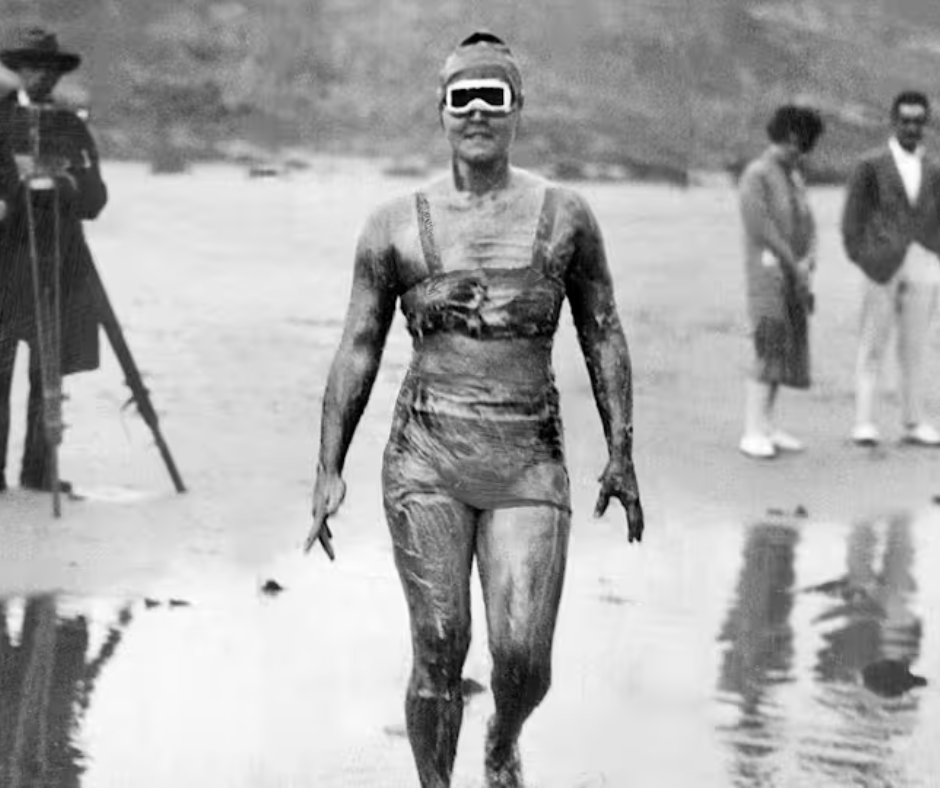
Wearing a then-controversial two-piece bathing suit, Ederle slathered herself in grease for the swim.

Founded in 1926.
For a century, our name has been synonymous with innovative engineering solutions.